ADA Accessible Portable Restroom Requirements for Rental Decision-Makers
When individuals rent out mobile washrooms, they generally begin with headcount, distribution timing, and budget. Accessibility occasionally obtains treated like a box to check at the end. That is where difficulty starts.
An ada obtainable portable restroom is not a specialized add-on for a narrow team of customers. It becomes part of fundamental access. If someone arrives at an occasion, public celebration, or various other short-term website and can not individually use the toilet since the system option or placement was careless, the failure is immediate and individual. It influences self-respect, safety, and whether that individual can stay at all.
For rental decision-makers, the issue is not simply whether to include one ada mobile restroom The genuine inquiry is whether the devices you lease, and the way you position them, line up with the federal ease of access standard that governs this area in the United States. The regulating criteria is the 2010 ADA Requirements for Accessible Design, as interpreted by the Accessibility Board and the Department of Justice. That issues due to the fact that lots of mistakes occur in the space between ordering an accessible unit and actually providing access.
I have seen this play out in acquainted ways. A planner orders an ada certified portable toilet and thinks the job is done. Then the system shows up and gets positioned on soft ground, behind various other bathrooms, or at the end of an incline that makes the strategy hard or difficult. On paper, an available unit was included. In practice, gain access to was never provided.
The standard that drives the decision
For general portable commode rentals, access is not optional. The ADA criteria resolve mobile toilet clusters, and the Gain access to Board has actually made clear that the guideline applies also at short-lived events. If you have a cluster of single-user mobile bathroom systems, at the very least 5 percent of the systems in that cluster must be accessible.
That percentage sounds easy up until you are making real rental decisions. If a website has several restroom collections spread out throughout a residential property, the evaluation has to do with each cluster, not just the overall matter throughout the entire event. Decision-makers sometimes assume one obtainable device somewhere on website covers everything. That can be a costly misconception if the accessible device is separated far from where individuals really are, or if an additional collection has none.
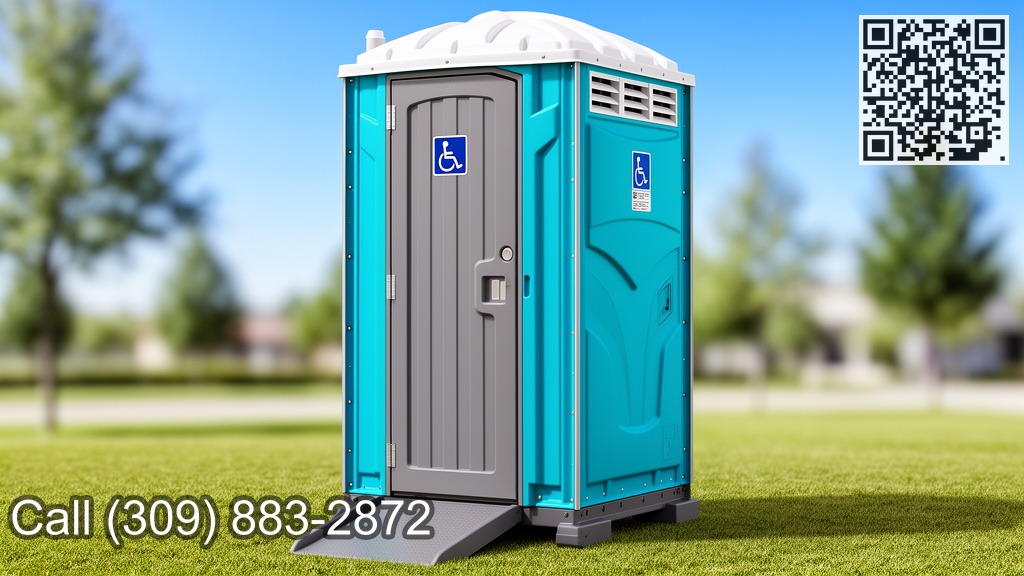
This is why the expression ada portable commode requirements need to not be minimized to an item spec alone. The requirement is partially regarding the number of devices, however it is also regarding place, course, entry, and usable indoor space. Ease of access resides in the complete setup.
There is one crucial restriction to keep right. The standards differentiate portable toilet devices at building sites that are made use of exclusively by construction workers. Those units are discriminated under the older 1991 scoping language referenced in federal products. For general ada portable toilet rental choices outside that slim context, the accessible-unit need stays the personnel problem. If your use instance is public-facing, event-based, customer-facing, or otherwise not restricted exclusively to construction personnel, you should not presume any exemption.
What "easily accessible" suggests in practice
A mobile system does not end up being certified due to the fact that the supplier identifies it as easily accessible. A real ada certified accessible portable restroom has to please numerous layers of accessibility expectations.
First, it must be identifiable. Easily accessible mobile bathroom systems should present the International Icon of Ease Of Access. That is standard, but it is more important than it appears. If the accessible unit is not clearly marked, customers might lose time browsing, ask for aid they need to not need to request for, or presume no easily accessible choice exists.
Second, the device needs to get on an easily accessible route and have an accessible entryway. This is where numerous rental arrangements stop working. Also the very best ada-compliant mobile restrooms can become pointless if they are put where the route is obstructed, unstable, or separated from the remainder of the website. If ramps or touchdowns are required, those components must fulfill the applicable ADA technical requirements also. A makeshift fix at delivery is not automatically an available fix.
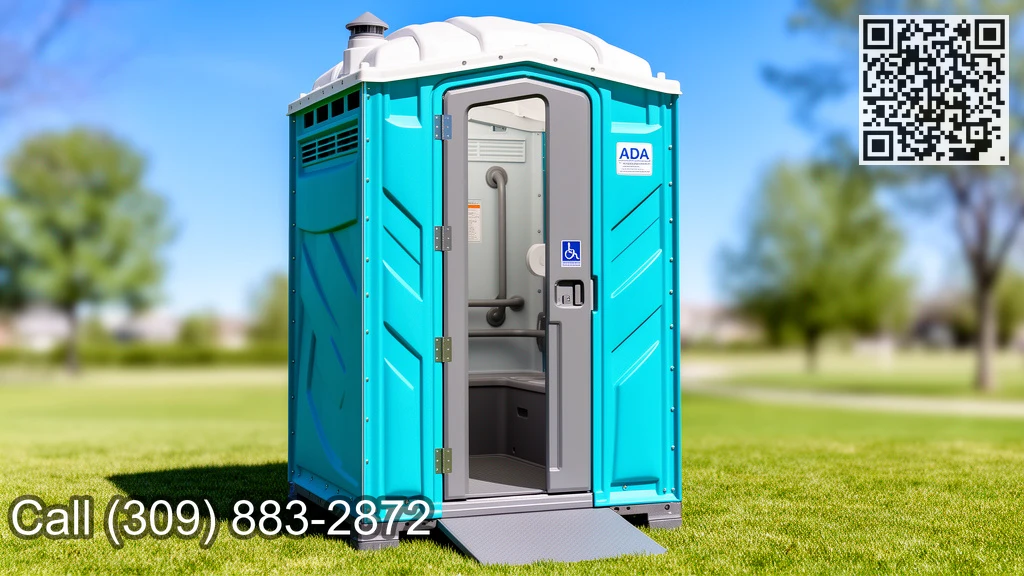
Third, the commode unit itself have to fulfill the technical toilet-room demands that apply. Federal assistance points to component clearances, turning area, door navigating clearances, and the applicable grab-bar and water-closet clearance policies. For a decision-maker, that suggests you are not simply leasing a larger box. You are renting out an area that must function dimensionally genuine customers with actual flexibility needs.
That difference issues since some individuals shop by outside appearance. They request the "large one" or the "wheelchair device" without confirming whether the version provided is really intended to function as an ada compliant portable toilet Dimension alone is not the standard.
The matter is only the beginning
The 5 percent rule usually gets duplicated without enough context. It is useful, however it can create incorrect self-confidence. If you have twenty single-user portable toilets in one collection, a minimum of one have to come. That appears manageable, and frequently it is. Yet if that a person easily accessible unit is locked, boxed in by crowd-control fence, or positioned where the course is broken, the number does not conserve you.
I urge rental decision-makers to think in layers. Start with quantity, then move quickly to usability. Ask on your own whether an individual who utilizes a flexibility tool can reasonably find the device, reach it, open it, maneuver inside it, and use it with privacy and freedom. The regulation utilizes technical language, yet the practical test is human.
There is likewise a site-planning issue that turns up at short-term events. Mobile toilet clusters typically get pressed to the edges of a location due to the fact that they are not pretty, they require solution gain access to, or organizers intend to keep them away from food areas. That impulse can undermine access. A remote positioning might develop a long or irregular route. It might also separate the available device from the primary customer circulation. Often the most inexpensive positioning produces one of the most costly problem.
Placement decisions are where many compliant rentals come to be noncompliant setups
In real procedures, placement is where the gap opens in between paperwork and actual access. A supplier may give an ada handicap available portable restroom that is constructed for ease of access, but the site staff or event group can still make it pointless in the final hour.
One usual blunder is dealing with the accessible device as an afterthought throughout load-in. Criterion units get aligned initially. After that the bigger available system obtains put onto completion wherever space is left. If that remaining space develops a bad strategy or unpleasant door handling conditions, the rental has actually already drifted off course.
Another error is ignoring the path from car parking, drop-off, or core task areas. The typical requires an easily accessible route and entryway. Decision-makers occasionally concentrate on what takes place at the commode door and neglect the technique. An unit got to only by harsh ground or an improvisated path can fail the very people it was suggested to serve.
I have also seen accessible devices made use of as storage space buffers because they are roomier inside. Personnel stash supplies there throughout arrangement and guarantee to clear them out later on. Sometimes they do. In some cases they neglect. The bigger inside that is supposed to sustain turning area comes to be a comfort storage room. That is not a triviality. It beats the purpose of the available unit.
Questions worth asking before you sign the rental agreement
A brief discussion prior to shipment can stop a lengthy day of rushing on website. The most effective vendors are typically straight about what their devices are designed to do, yet the worry of excellent decision-making still rests with the renter.
Here are the inquiries that matter most:
- How several single-user systems will certainly be in each collection, and the number of obtainable devices are consisted of for each cluster?
- Is the device clearly identified with the International Sign of Accessibility?
- What website problems are required to give an easily accessible path and accessible entrance?
- If ramps or touchdowns are required, who is accountable for offering ADA-compliant ones?
- Has the last positioning plan been reviewed with ease of access in mind, not simply delivery convenience?
That list looks basic, but it requires the ideal conversation. Notification that just one question is about the system itself. The others deal with scoping, course, and responsibility. Those are the places where rentals usually go wrong.
Temporary does not imply exempt
This point should have emphasis because it is frequently misunderstood. The Accessibility Board has actually clearly specified that the 5 percent accessible-unit policy applies to mobile commode clusters even at short-lived occasions. The truth that a celebration lasts one day, one weekend, or one week does not erase availability obligations.
That issues throughout a wide variety of setups, though the lawful information of a certain occasion can vary and must be evaluated with counsel when risks are high. The functional lesson is simple. If your occasion is temporary, do not think you have a lot more adaptability than the common permits. Temporary problems still need to be accessible conditions.
There is a frame of mind behind this complication. Some planners see portable commodes as naturally temporary devices, and due to the fact that they are short-term, they presume conformity can be looser. Federal access regulations do not function by doing this below. A short-lived toilet that the general public have to make use of is still a toilet that needs to be accessible under the governing requirement when the scoping causes apply.
Why clusters matter so much
The word "cluster" is easy to skim previous, but it has real consequences. Portable washrooms are frequently dispersed throughout a home in a number of groupings. One collection might rest near the entry, one more by a performance area, and one more near parking. If you only count the total number of commodes on site and afterwards provide one easily accessible unit somewhere, you can end up with an arrangement that leaves part of the website effectively inaccessible.
That is why seasoned organizers map commode areas early, on time. They do not simply ask, "Do we have an obtainable system?" They ask, "Where is each collection, and does each cluster https://milooakx525.yousher.com/ada-compliant-portable-toilets-federal-access-policy-for-rentals satisfy the availability demand?" This is particularly vital when site intends develop. A late change to relocate a collection or split it in 2 can quietly develop a conformity issue if the accessible count and positioning are not adjusted.
For big sites, this comes to be a control issue in between logistics, operations, and whoever is responsible for ADA conformity. If those features are divided across groups, a person needs authority to claim, "Stop, we transformed the cluster arrangement, so we require to review the easily accessible restroom plan." Without that checkpoint, the last setup can drift away from the original certified design.
Product tags can deceive, so demand specifics
The market makes use of several overlapping expressions: ada compliant portable restrooms, ada-compliant mobile toilet, ada compliant mobile toilets, and ada available portable restroom Those tags serve for search and purchase, yet they can produce a false sense of precision. Not every conversation makes use of the exact same terms carefully.
A vendor could explain an unit as wheelchair accessible in a basic feeling. An additional may market an oversized mobile restroom and think customers will certainly treat it as obtainable. Those summaries are inadequate on their own. What matters is whether the device and its installment satisfy the access standards that actually apply.
That is why I choose plain, functional follow-up concerns over advertising and marketing language. Ask whether the device is meant to satisfy ADA availability assumptions for portable toilet use. Ask just how it is identified. Ask what placement problems must exist for compliant usage. Ask that is responsible for course problems and any required ramps or landings. Those questions punctured branding fast.
The human side of a technological standard
The technological rules are there because people need room to move, transform, technique, and use fixtures safely. It is very easy to lose sight of that when the conversation gets hidden in purchase terms.
For a person that uses a wheelchair or other movement gadget, the difference in between a convenient system and a terribly placed one is not refined. A door that can not be approached correctly, a route that damages down in the last couple of feet, or an interior that does not enable appropriate handling can end the communication before it starts. The individual might have to seek help, leave the occasion, or endure discomfort and embarrassment.
That is why I have a tendency to press back when accessibility gets framed as "unique accommodation." Restroom accessibility is fundamental engagement. If people can not utilize the facilities supplied, they are not totally consisted of in case or setting. A sound ada mobile toilet rental strategy supports presence, size of keep, and the easy capacity to be present without additional negotiation.
Compliance becomes part of a broader enforcement climate
Accessibility expectations are not fading into the history. If anything, they are being strengthened in a wider conformity setting. Federal ADA activity has proceeded throughout sectors, including recent assistance on electronic availability due dates for state and local government entities. That guidance is about web and mobile accessibility, not mobile bathrooms, however it mirrors something essential for rental decision-makers: ADA compliance continues to be active, visible, and enforceable.
That wider environment matters because organizations often deal with physical access decisions as low-risk if they are short-term or functional. That is not a risk-free assumption. Even aside from legal exposure, access failures take a trip promptly via participant feedback, public issues, and track record. A washroom issue is remarkable for all the incorrect reasons.
A practical review before distribution day
The cleanest ADA planning takes place prior to the vehicle ever rolls. Once systems are onsite, every modification sets you back even more time, more money, or both. Prior to distribution, it aids to go through a simple evaluation with your operations group and vendor.
Use this five-point check:
- Confirm the number of devices in each cluster and verify that at least 5 percent are accessible.
- Confirm which specific unit or systems are the easily accessible ones and that they will show the ease of access symbol.
- Review the specific positioning area, including the course individuals will certainly take to reach the unit.
- Resolve beforehand whether ramps or landings are required and that is giving them.
- Protect the obtainable system from being obstructed, repurposed, or moved throughout setup.
That last point is worthy of much more regard than it normally obtains. Even when an available system shows up in the right amount and the best model, it can still be compromised by casual functional choices after distribution. One of the most usual availability failings are not always significant. Often they are regular oversights that no one owned.
Good choices begin with a broader meaning of "rental"
A lot of purchase groups think they are leasing a bathroom. In reality, they are renting out accessibility to sanitation for a blended public. That is a larger obligation. It includes the system, the matter, the course, the entry, the recognition, and the last condition in the field.
If you approach the job in this way, the phrase ada compliant available mobile restrooms quits seeming like a product category and starts sounding like a functional outcome. That change works. It moves focus from directory language to real-world use.
For most decision-makers, the most effective path is not made complex. Understand that the 2010 ADA Requirements control. Remember that at least 5 percent of single-user portable toilet units in each cluster must be accessible, also at temporary occasions. See to it obtainable devices are understood the International Sign of Ease Of Access. Treat course, entry, ramps, and landings as component of the demand, not extras. And never ever think that a larger unit, a vendor tag, or a short-lived arrangement instantly pleases the standard.
That is how thoughtful leasing choices obtain made. Not by inspecting a box, yet by making certain the washroom can in fact be used by the people it is intended to serve.
 Ask ChatGPT
 Ask Grok
 Ask Perplexity
 Ask Claude
 Ask Google AI
 Ask You